 URKL News
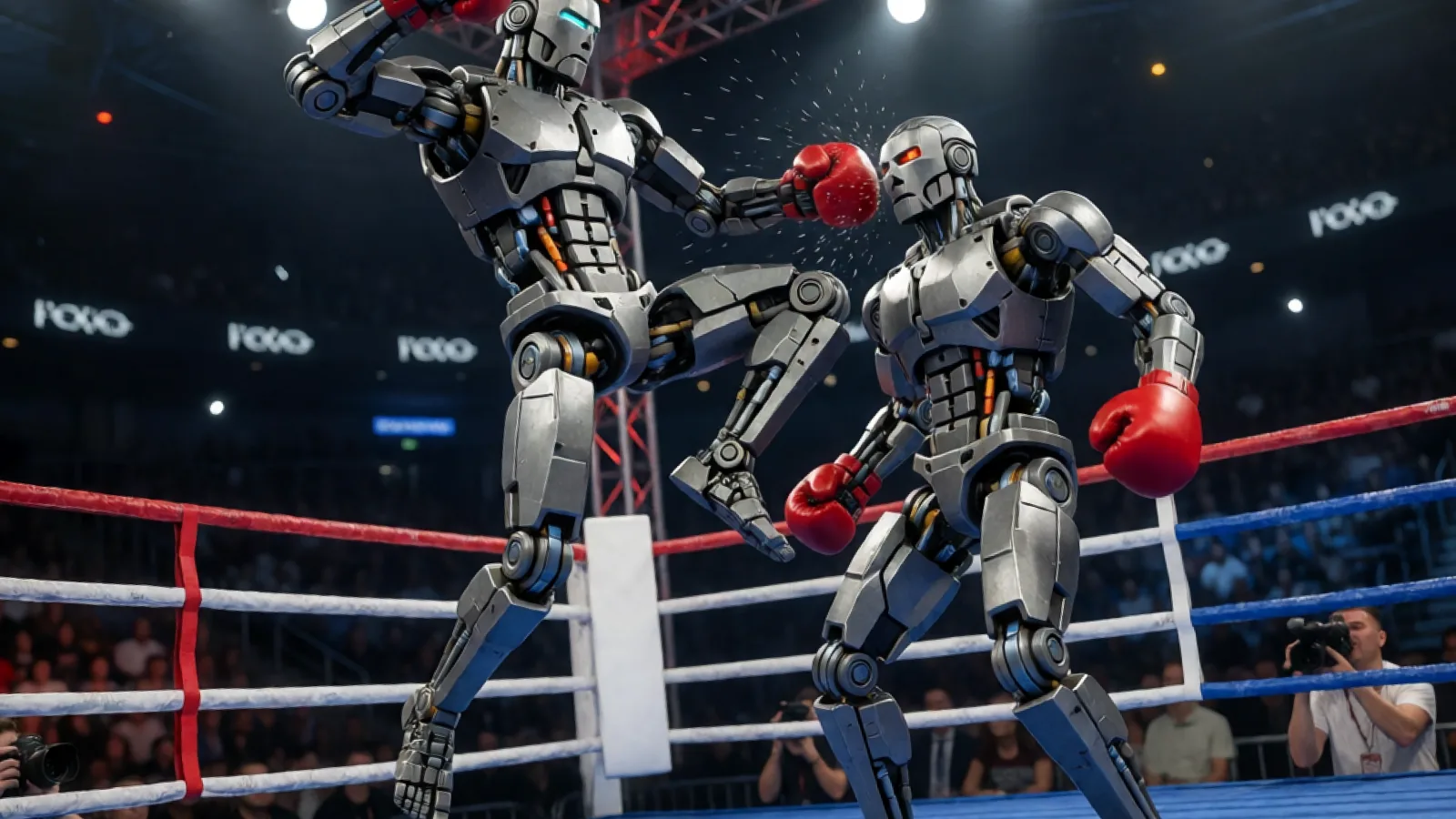
URKL's September 19 Shanghai show introduced three notable movements: a kip-up, curved dragon footwork and a flying knee. They expanded the public demonstration beyond the striking and damage seen at the July Shenzhen opening event.
Kip-up: recovering from the floor
A kip-up returns the robot from lying on its back to a standing or combat-ready posture through one coordinated impulse. The robot must orient itself, move its limbs safely, generate enough momentum and stabilize its feet on landing.
The final transition is crucial: a spectacular recovery has little fighting value if the machine immediately falls again. Public footage demonstrates selected successful attempts, not a guarantee that the movement works from every fallen position.
Dragon footwork: turning under control
The serpentine or dragon-style sequence replaces a straight approach with a curved route and repeated changes of heading. Each turn shifts the robot's momentum and changes where its next foot must land, while its upper body continues guarding or tracking an opponent.
Science and Technology Daily attributed the performance to rapid control and balance compensation. That technical explanation comes from event reporting; public video does not reveal the underlying control software.
Flying knee: landing after the strike
The flying knee combines a jump, an airborne knee action and a landing. Take-off and impact provide the spectacle, but restoring balanced ground contact is what makes the sequence potentially repeatable.
Together, the three movements test recovery, repositioning and explosive whole-body coordination. They appeared alongside Shanghai's multi-robot finale and sold-out live sessions, covered in our URKL Shanghai report.
The full Shanghai highlights show the sequences, but edited clips cannot establish success rates, strike forces or complete autonomy. For earlier footage, see the Shenzhen opening-night replay; all current sources are collected in where to watch URKL.