 URKL News
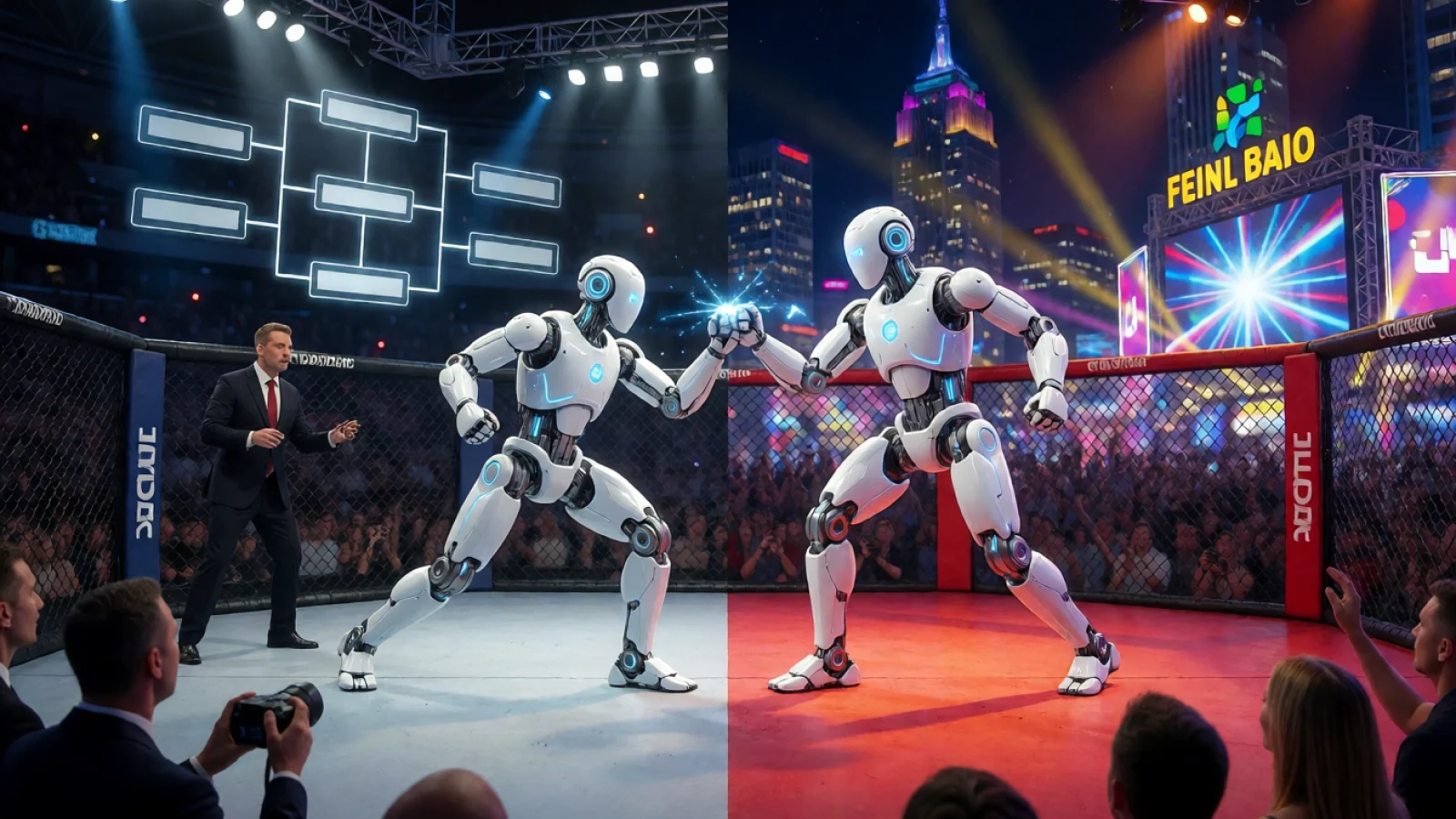
The shortest way to tell them apart
Ask one question: what does the result change?
If a match is part of the formal championship, the rulebook should explain how its outcome affects progression, elimination or the title. If it belongs to the city tour, the published result belongs to that show unless the organizer explicitly documents a championship consequence.
| Feature | URKL championship | URKL City Tour | |---|---|---| | Primary purpose | Determine competitive progression and a champion | Bring commercial robot-fighting shows to host cities | | Governing reference | Official URKL rulebook and event bulletins | Event-specific tour presentation and organizer information | | Qualification | Simulation review and physical deployment stages in V2.0.0 | No equivalent public qualification route established for every tour appearance | | Results | Can affect advancement or standings when assigned to a formal stage | Belong to the tour event unless a separate official link is published | | Format | Structured stages and documented match rules | Can include sessions, new-move demonstrations and special multi-robot showcases | | Shanghai, September 19, 2026 | Not identified as a championship standings update | First commercial city-tour stop in the cited reporting |
This distinction does not make tour fights fake. It describes what the outcome means competitively, as shown by the Shanghai city-tour event.
What the official championship structure says
URKL’s V2.0.0 rulebook identifies the T800 as the designated humanoid platform and describes a multi-stage competition open to universities, enterprises and research institutions.
Section 4.2 presents this route:
- registration and qualifying;
- 32 teams advancing to on-site deployment;
- 16 teams reaching a group stage;
- eight teams reaching a double-elimination finals stage.
Section 4.3 also publishes a provisional calendar, including group competition in August–September, later rounds in October–November, and semifinals plus a global final from December to January 2027. Those are dates in the rulebook’s plan, not independent confirmation that every listed match occurred on schedule.
Our URKL qualification report explains the published team field and qualification context.
The rulebook contains an unresolved bracket difference
Section 8 is titled “Knockout Stage Competition Rules,” but it describes 16 teams in a single-elimination stage, with random pairings, ROUND3 matches and a ROUND5 third-place match.
That does not read as the same structure as section 4.2’s eight-team double-elimination final. The current document therefore contains two provisions that need event-level clarification:
- section 4.2: 16 teams in groups, then eight in double elimination;
- section 8: 16 teams in single elimination.
A responsible report should not combine them into “16 teams enter a double-elimination bracket” or silently choose the more convenient version. Until the organizer publishes a clarification or revised rulebook, cite the section relevant to the topic and acknowledge the difference.
What the city tour is designed to do
Jiefang Daily described the city tour as an important commercial path outside the formal championship system. Its format combines robot competition with local culture, entertainment and city promotion.
That gives the tour more freedom than a fixed league bracket. A host event can include:
- afternoon and evening sessions;
- demonstrations of newly introduced movements;
- local cultural programming;
- audience-focused presentations;
- special formats such as a two-against-one finale.
Shanghai illustrated that flexibility. The September 19 event offered two public sessions, introduced a kip-up, serpentine footwork and a flying knee, and ended with White Eagle and Golden Flash teaming against Matador.
Those were physical demonstrations and reported results. They were not, by themselves, a published championship table.
Does a city-tour win count as a real win?
Yes—as a result in that event and format. What it does not automatically do is alter a championship ranking.
For example, Shanghai Observer reported White Eagle as the winner of Shanghai’s afternoon and evening sessions. That supports the statement “White Eagle won both reported Shanghai sessions.” It does not support “White Eagle earned two championship wins” unless an official championship document says so.
Likewise, the Shanghai multi-robot result should be recorded as a two-against-one showcase, not converted into two ordinary one-on-one victories.
This approach preserves the meaning of real performances while avoiding inflated records.
Why a league would operate both formats
The two structures solve different problems.
The championship tests progression
A championship needs repeatable qualification, inspections, advancement rules and a route to a title. Its central question is which team performs best under the formal competition structure.
The tour tests public delivery
A tour must produce an understandable live show in a new venue and city. It can test ticketing, presentation, audience engagement and demonstrations that would not fit a standard bracket.
Both generate engineering evidence
Physical matches expose robots to contact, falls, recovery and operational pressure regardless of whether championship points are at stake. The engineering value of a fall does not disappear because it happened during a tour show.
However, public claims about autonomy or coordination still need to be attributed to the organizer and tied to the particular event.
How to label future URKL results
Before publishing a score or updating a fighter record, check four fields:
- Competition: championship, city tour or another organizer’s event?
- Stage: qualifier, group, elimination, final or exhibition?
- Format: one-on-one, team contest or multi-robot demonstration?
- Consequence: official advancement, session win or showcase result?
A clear result line might read: “White Eagle won the reported Shanghai evening city-tour session.” A poor one would read: “White Eagle is leading the URKL championship,” because the second statement adds an unsupported standings claim.
Our URKL 2026 event timeline separates documented public milestones from the rulebook’s planned calendar. For future dates, use the next URKL event tracker rather than assuming a tour stop or bracket match has been confirmed.
The bottom line
The championship and city tour are complementary, but they are not interchangeable. The championship supplies formal progression and a title; the tour supplies commercial live events and room for special demonstrations.
Shanghai’s sellout and reported results are meaningful on their own terms. They do not need an invented championship connection to matter. The most accurate way to follow URKL is to enjoy the show, record the format and count only the points that the organizer has actually documented.